Motley Fool vs Seeking Alpha Premium: Which Is Worth Your Money in 2026?
Many serious investors end up using tools like both — Seeking Alpha for the research infrastructure and screening, and a picks service for inspiration.

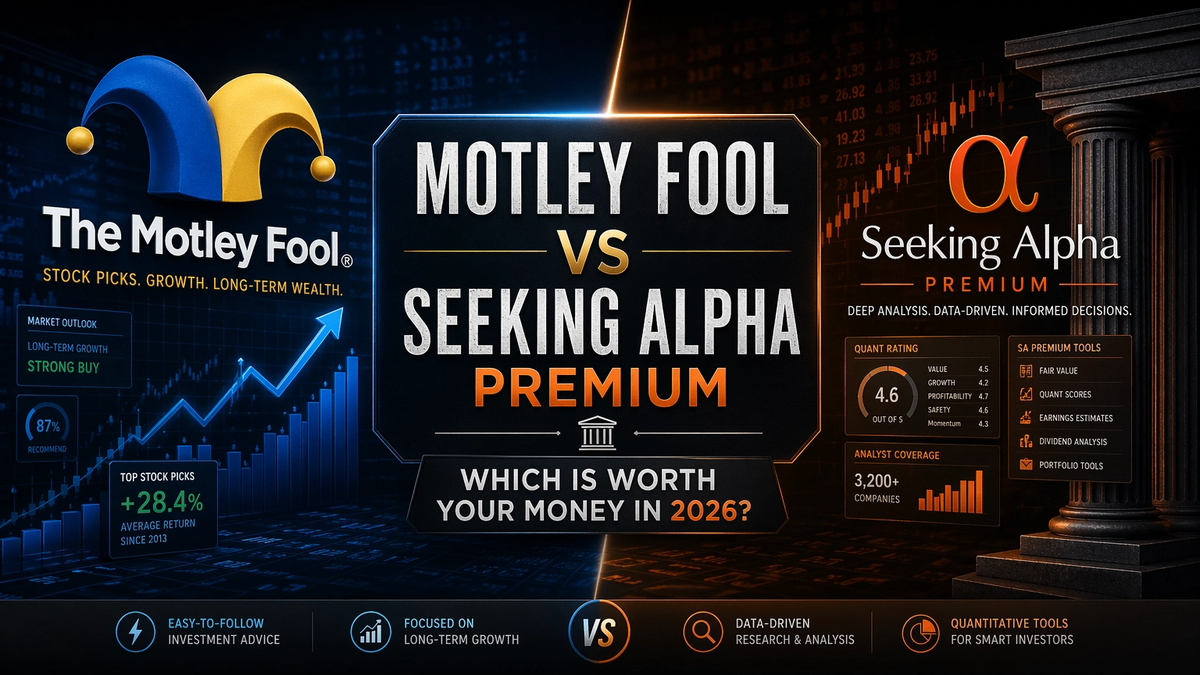
Motley Fool vs Seeking Alpha Premium – Motley Fool stock picks with 28.4% average returns compared to Seeking Alpha Quant Ratings and data-driven research tools 2026If you're a self-directed investor trying to sharpen your edge, you've almost certainly come across two names: Motley Fool and Seeking Alpha. Both promise to help you beat the market. Both charge hundreds of dollars a year. And both have passionate subscribers who swear by them.
But they are fundamentally different products, built for different types of investors. Choosing the wrong one is an expensive mistake. Here's everything you need to know before you subscribe.
What they actually are
Motley Fool's Stock Advisor is a stock recommendation service. Every month, their analysts hand-pick two stocks, write up a detailed research report explaining the thesis, and tell you to buy and hold for at least five years. You're essentially outsourcing your stock selection to a team of professionals. It's simple, opinionated, and requires minimal effort on your part.
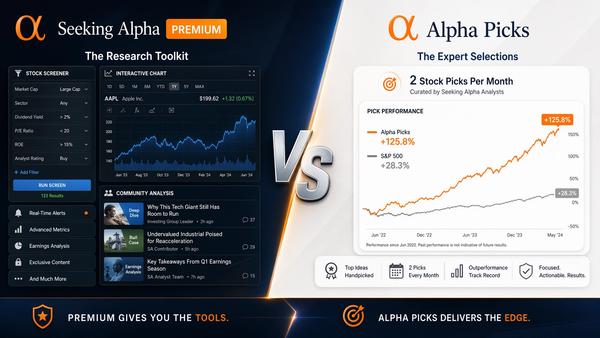
Seeking Alpha Premium is something else entirely. It's a research platform — a toolkit that aggregates three different rating systems (a proprietary quantitative model, Seeking Alpha's own analysts, and Wall Street analysts), thousands of contributor articles presenting both bullish and bearish cases, advanced stock screeners, and deep financial data on valuations, growth, profitability, and momentum. Rather than telling you what to buy, it gives you the infrastructure to figure that out yourself.
This distinction matters more than any feature comparison.
The performance numbers (read carefully)
Both platforms advertise impressive track records, but the fine print is important.
Motley Fool claims over 1,000% returns since Stock Advisor launched in 2002, beating the S&P 500 by roughly 800 percentage points. That sounds extraordinary — and in some ways it is. But those returns assume subscribers bought every single recommendation immediately and never sold. In reality, only around 66% of Motley Fool's picks are profitable. The headline number leans heavily on a small number of enormous winners.
Seeking Alpha's Alpha Picks service — their stock recommendation add-on — shows 284% returns over three years versus the S&P 500's 83%. That's a shorter track record, but the hit rate is stronger: 76 to 81% of picks are profitable, with average gains of 121% on winning positions. Their methodology is also academically validated, based on the same quantitative framework that powers their Quant Ratings system.
Neither set of numbers should be taken at face value. Past performance doesn't guarantee future results. But if consistency of picks matters to you, Seeking Alpha's batting average is meaningfully higher.
Pricing breakdown
Motley Fool Stock Advisor runs $99 to $199 per year depending on the promotion — making it the more affordable entry point.
Seeking Alpha Premium is currently $299 per year, though new subscribers can usually find it at $269 through affiliate promotions with a 7-day free trial. If you want both the research platform and the stock pick recommendations, Alpha Picks is an additional ~$499/year, or you can bundle both for around $600 with a $159 discount. There's also a Pro plan at $2,400/year, though most reviewers consider this unnecessary for individual investors.
For context, Seeking Alpha's monthly billing works out to around $39/month (~$468/year), so committing to annual is the smart move if you decide to subscribe.
Who each platform is built for
Motley Fool makes the most sense if you want simple, low-effort guidance. You don't need to understand valuation multiples, earnings revisions, or factor grades. You get two stock ideas a month with a clear thesis, and you decide whether to act on them. It's particularly well-suited to newer investors or anyone who doesn't want to spend hours on research.
Seeking Alpha is a different commitment. To get real value from it, you need to be comfortable reading 10 to 15-minute analyst articles, interpreting financial metrics relative to sector averages, and cross-referencing multiple rating systems. Reviewers consistently note it's not a beginner platform — but for active investors who want that depth, it's arguably the most comprehensive retail-facing research tool available.
Both platforms are heavily US-focused. If you're primarily investing in European or other international markets, neither will fully serve your needs.
The crowdsourcing factor
One of Seeking Alpha's most distinctive features is its contributor model. Over 18,000 writers publish analysis on the platform — financial bloggers, independent analysts, and Wall Street professionals. Crucially, you get both sides: bullish articles arguing why a stock will soar, and bearish ones laying out the risks. Premium subscribers can comment, which keeps the community reasonably serious.
This is genuinely valuable for stress-testing your thinking. If you're considering buying a stock, reading five to ten articles — including the bearish ones — forces you to confront risks you might not have considered. The quality of articles varies, which is the inherent downside of crowdsourcing, but the sheer volume and diversity of perspectives is something no single analyst service can replicate.
The honest verdict
There's no universally better platform — only the right platform for your investing style.
If you want someone to point at two stocks a month and say "buy these," Motley Fool delivers that at a lower price with a longer track record. If you want to do your own research with professional-grade data, contributor analysis, and a quantitative edge, Seeking Alpha Premium is in a different league.
Many serious investors end up using tools like both — Seeking Alpha for the research infrastructure and screening, and a picks service for inspiration. But if you can only choose one, be honest about how much time and effort you're willing to put into your investing. Seeking Alpha rewards the work. Motley Fool removes the need for it.
Either way, both offer trial periods. Test before you commit.