Seeking Alpha vs Simply Wall St: Pick the Right Tool
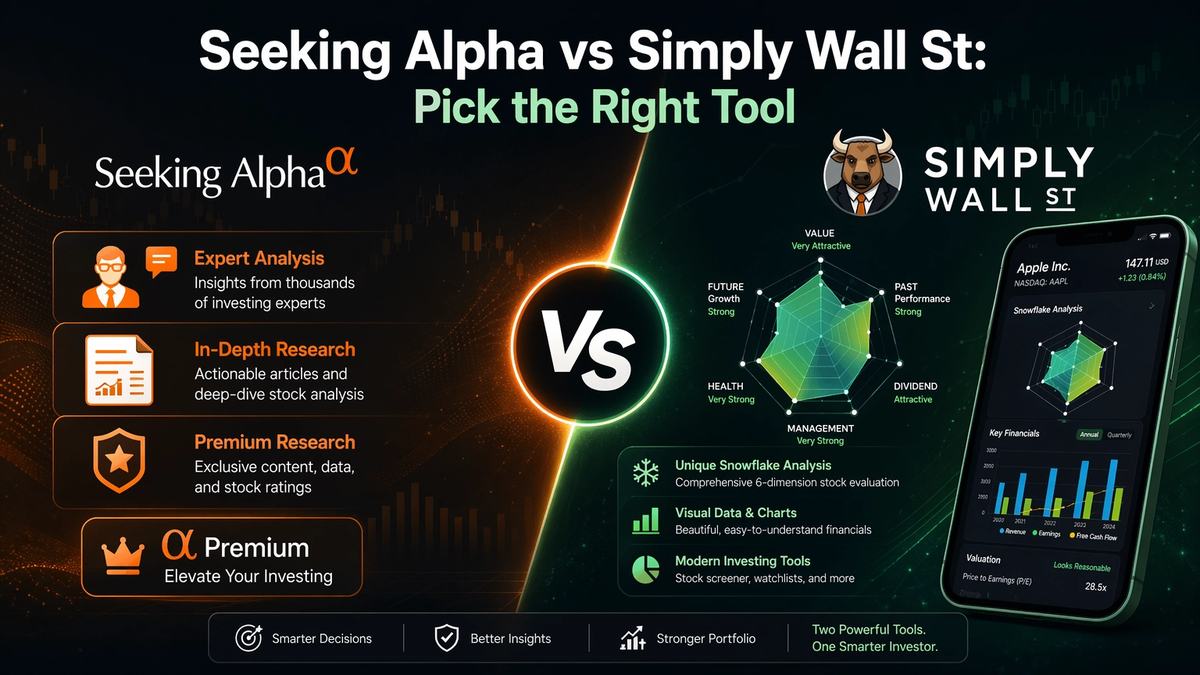
Seeking Alpha vs Simply Wall St – Seeking Alpha offers expert analysis and Quant Ratings while Simply Wall St provides Snowflake Analysis and visual stock data.

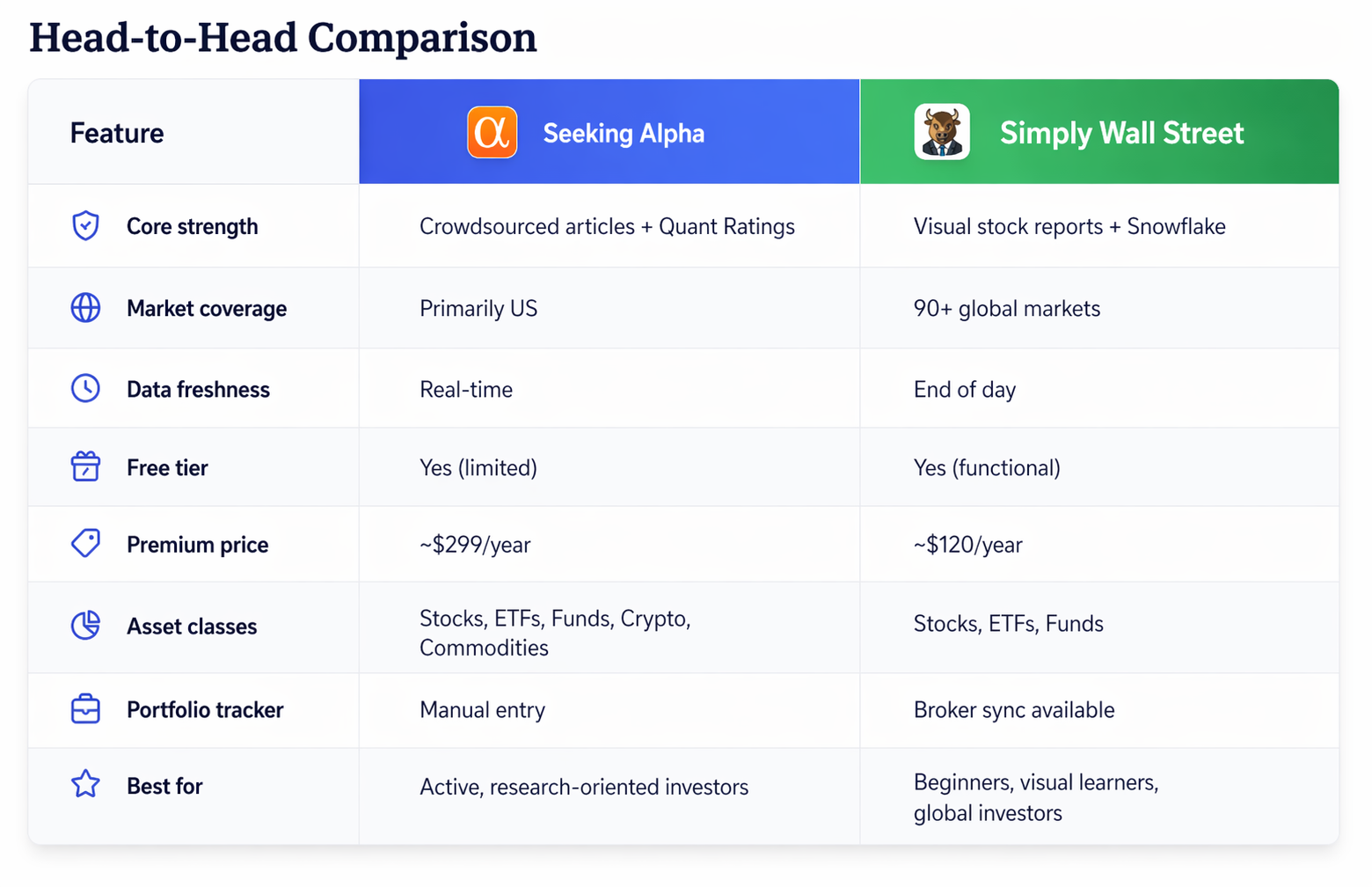
Seeking Alpha vs Simply Wall St – Seeking Alpha expert analysis and premium research compared to Simply Wall St Snowflake Analysis and visual stock evaluation toolsPicking the right stock research platform is not just about features and pricing. It is about finding a tool that matches how you think, how much time you have, and what kind of investor you are trying to become. Seeking Alpha and Simply Wall Street are two of the most talked-about platforms in this space, but they serve very different purposes. This comparison breaks down what each one actually does, where it falls short, and which type of investor is best served by each.
What Is Seeking Alpha?
Seeking Alpha started as a crowdsourced financial research platform and has grown into one of the largest investing communities on the internet. The platform publishes around 400 articles and news updates every day, contributed by over 7,000 independent analysts. These contributors write about stocks, ETFs, mutual funds, commodities, and even cryptocurrencies. The editorial team reviews submissions for quality, but the depth and rigor of individual articles can vary considerably depending on who wrote them.
Beyond community content, Seeking Alpha runs a proprietary Quant Rating system. This system evaluates stocks across five key factors: Value, Growth, Profitability, Momentum, and EPS Revisions. According to the company's back-tested data, stocks rated "Strong Buy" by the Quant system have consistently beaten the S&P 500 year after year since 2018. For the week ending April 18, 2026, their picks from 2022 onwards showed an average return of over 100% compared to around 26% for the S&P 500 over the same period.
Seeking Alpha is a US-focused platform, though it does cover some international stocks. It provides real-time data feeds, earnings transcripts, analyst price targets, and calendar tools — features that active traders find genuinely useful.
Pricing: Free tier available. Premium plan is $299/year. Pro and Alpha Picks tiers go higher.
What Is Simply Wall Street?
Simply Wall Street launched in 2014 out of Sydney, Australia. Its entire philosophy is built around making financial data visually accessible. Every stock gets a "Snowflake" graphic — a pentagon-shaped diagram that scores the company across five dimensions: valuation, future growth, past performance, financial health, and dividends. The data behind this graphic is sourced from S&P Global Market Intelligence and evaluated using a documented quantitative model available on the company's GitHub.
The platform covers over 120,000 listed stocks across roughly 90 global markets. This makes it significantly more international in scope than Seeking Alpha. Instead of reading lengthy research articles, users can glance at a Snowflake and get a rough sense of a company's fundamentals in under a minute.
Simply Wall Street is genuinely well-suited to investors who are newer to the market or who prefer to process information visually rather than through dense written analysis. However, its data refreshes on an end-of-day or delayed basis — not suitable for active or short-term traders.
Pricing: Free tier available. Premium starts around $10/month when billed annually.
People Also Ask
1. Is Simply Wall Street more accurate than Seeking Alpha?
Neither platform claims to predict stock performance with certainty. Simply Wall Street uses a standardized, data-driven model applied equally to every stock. Its fair value estimates are based on analyst consensus figures from S&P Global, which means accuracy depends heavily on the quality of underlying analyst forecasts. Seeking Alpha's Quant Ratings are algorithm-driven and have shown strong back-tested results, though real-world returns can differ from historical simulations. For pure fundamental data accuracy, Simply Wall Street uses a transparent, consistent methodology. For a broader range of investment opinion, Seeking Alpha provides more perspectives.
2. Which platform is better for beginners?
Simply Wall Street has the edge here. Its visual format removes a lot of the friction that beginners face when reading raw financial statements. The Snowflake makes it easy to spot potential red flags at a glance without needing to understand every metric behind it. Seeking Alpha, while informative, can be overwhelming for new investors because of the sheer volume of content and the need to assess the credibility of each contributor independently.
3. Does Seeking Alpha cover international stocks?
Seeking Alpha is primarily focused on US equities. It does include some international coverage, but the depth of analysis for non-US stocks is considerably thinner. Simply Wall Street, by contrast, covers over 120,000 stocks across approximately 90 markets worldwide, making it the stronger choice for investors who trade outside the United States.
4. Is Simply Wall Street worth paying for?
The free tier of Simply Wall Street is more functional than the free tier of Seeking Alpha. If you are an occasional investor who wants a quick visual overview of a stock before making a decision, the free plan may be enough. The paid plan makes sense if you actively track a larger portfolio, want unlimited Snowflake reports, or use the screener frequently. At around $10/month, it is one of the more affordable options in the stock research space.
5. Can you use both Seeking Alpha and Simply Wall Street together?
Yes, and many investors do. The two platforms complement each other well. Simply Wall Street can give you a fast visual health check on a stock, helping you filter out obvious problems. You can then use Seeking Alpha to read deeper analysis from contributors on the stocks that pass your initial screen. Used together, they cover both the visual/quantitative side and the narrative/opinion side of stock research.
Which One Should You Choose?
The decision comes down to your investing style and what you are actually trying to get out of a research tool.
Choose Seeking Alpha if you read widely, enjoy following market commentary, trade primarily US stocks, and want access to both community-written analysis and a proven quantitative rating system. The premium price is higher, but for active investors who use the platform daily, it delivers a significant amount of content and tooling.
Choose Simply Wall Street if you prefer data over opinion, invest in global markets, want a clean and fast overview of any stock's fundamentals, or are still building your investing knowledge. The lower price point and visual approach make it easier to get started, and the global coverage is a genuine advantage.
One thing worth noting: both platforms have free tiers, which means there is no real cost to trying both before committing to a subscription. Spending two weeks on each platform with a watchlist of stocks you already follow will tell you more than any written comparison can.
Neither tool replaces careful reading of company filings, earnings calls, and financial statements. They are research aids, not substitutes for doing your own thinking. The best platform is the one you will actually use consistently.