Yahoo Finance vs Seeking Alpha: Which Is Better?
Yahoo Finance vs Seeking Alpha – Yahoo Finance offers free real-time data and news while Seeking Alpha provides deep research and Quant Ratings. Compare both now.

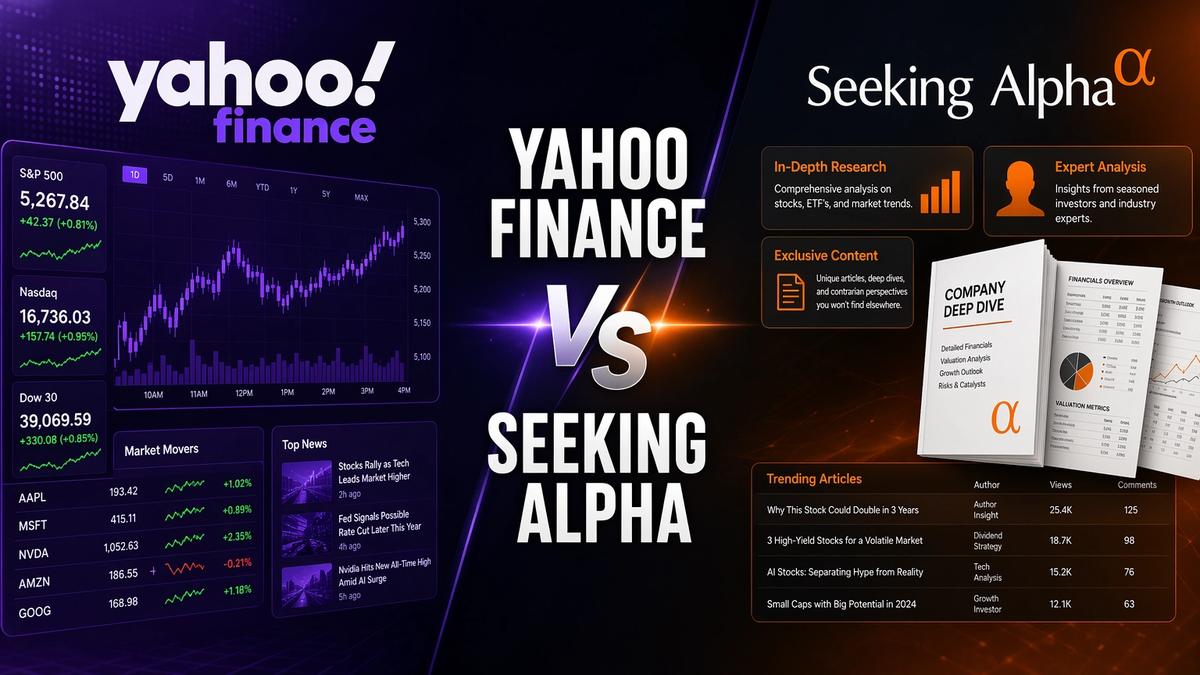
Yahoo Finance vs Seeking Alpha – Yahoo Finance real-time market data and news compared to Seeking Alpha in-depth research, expert analysis and exclusive contentIf you have spent any time researching stocks online, you have likely landed on both Yahoo Finance and Seeking Alpha at some point. They are two of the most visited investment research platforms in the world, and they often get mentioned in the same breath. But they are built for different purposes, and picking the wrong one for your needs wastes both time and money. This guide breaks down what each platform actually offers, where each one falls short, and which type of investor belongs on which platform.
What Is Yahoo Finance?
Yahoo Finance was launched in 1997, making it one of the oldest online hubs for stock research. The platform has more than 90 million monthly users in the US alone and is well known for the free data it provides about stocks, ETFs, mutual funds, and bonds. For most casual investors, it serves as a daily dashboard — a place to check quotes, scan headlines, and monitor a watchlist without logging into a brokerage.
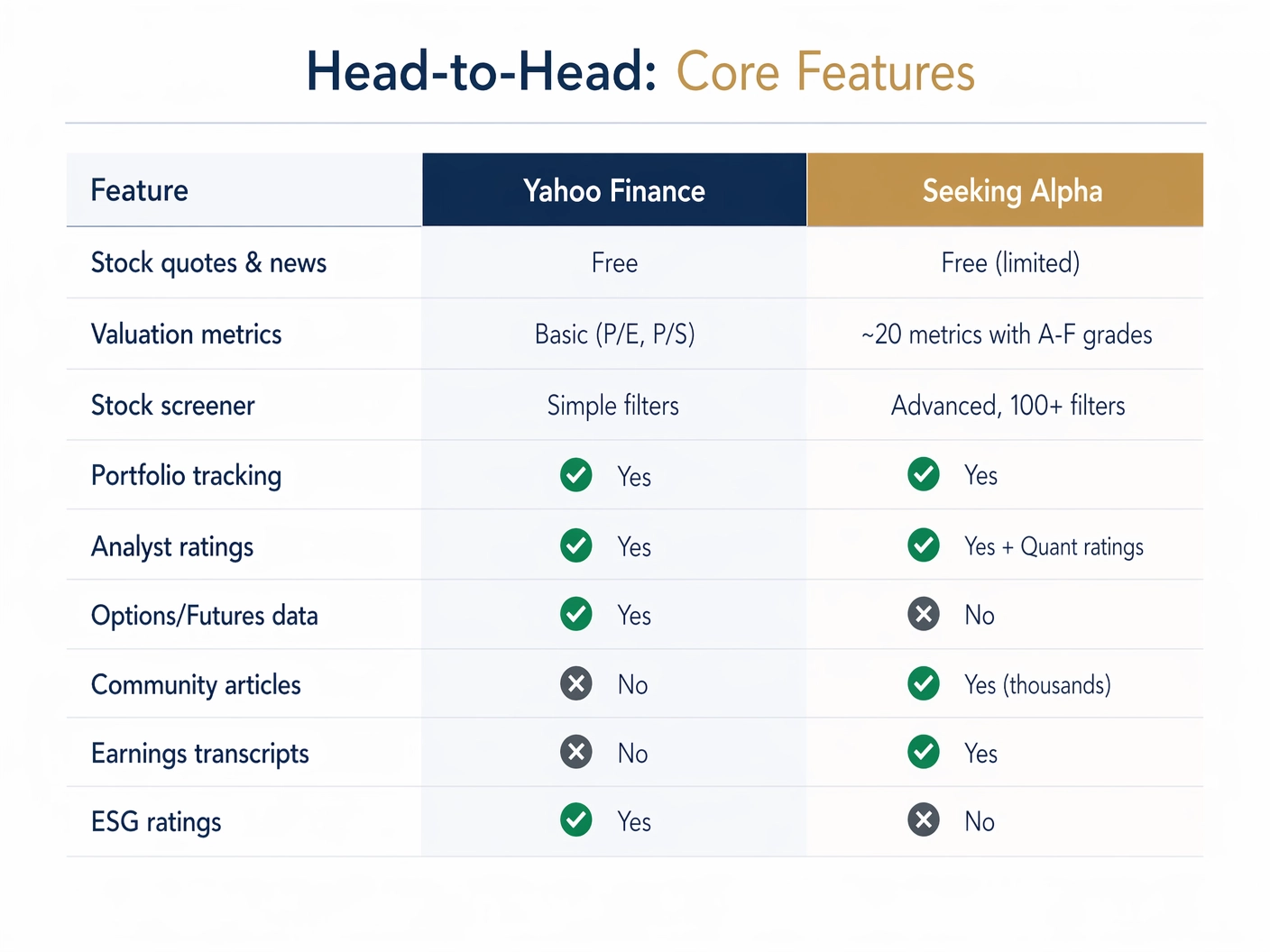
The free version covers quite a lot of ground. You can view balance sheets, income statements, analyst ratings, and basic charts without paying anything. Yahoo Finance also covers options, futures, and currencies. Which Seeking Alpha does not, making it more useful for traders who work across multiple asset classes.
What Is Seeking Alpha?
Seeking Alpha is an online investing community founded in 2004 that now has more than 20 million active users. It focuses on stocks and ETFs and offers access to extremely detailed fundamental research and screeners. Seeking Alpha is perhaps best known for its research articles, which are contributed by thousands of financial professionals including analysts and fund managers.
The platform's defining feature is depth. Seeking Alpha excels at diving deep into each stock and providing actionable analysis. The platform provides nearly 20 valuation metrics, for example, and rates each company on each metric on an A-F scale based on how it compares to peers. There are nearly as many metrics — each with their own A-F ratings — for growth, momentum, and profitability.
Stock Research Depth
This is where the two platforms diverge most clearly. Yahoo Finance offers only a few common financial metrics like price-to-earnings and price-to-sales. There is no peer analysis or ratings similar to those in Seeking Alpha. Yahoo Finance does, however, offer fair value analysis through its paid plans, which Seeking Alpha does not include.
Seeking Alpha rates stocks using a quantitative model on a 1-5 scale, covering value, growth, and momentum as separate factors. It also layers in ratings from contributing analysts. These Quant ratings are derived by comparing over 100 metrics for a stock to the same metrics for other stocks in its sector. Yahoo Finance, by contrast, uses a stock score between 0 and 100 that factors in fair value analysis, dividends, innovation, hiring trends, and insider sentiment — a different approach, but one with less granularity.
Screeners
Seeking Alpha has advanced screeners with hundreds of options to get the exact data you need. Yahoo Finance's screeners are much simpler and offer fewer filtering options.
On Seeking Alpha, you can filter by Quant rating, author rating, sector, dividend safety, revenue growth, profit margin, and dozens of other data points. Yahoo Finance lets you filter by fundamental metrics and fair value criteria, but you cannot screen by ratings, which limits how targeted your searches can get.
FAQ: People Also Ask
Q: Is Seeking Alpha better than Yahoo Finance?
It depends on what you need. The biggest strengths of Seeking Alpha are its Quant Ratings and detailed analysis, while Yahoo Finance offers a slightly more user-friendly interface. Seeking Alpha is ideally suited for intermediate and advanced investors who want to dive into the numbers and read detailed analysis before making buy or sell decisions. Yahoo Finance offers an interface that may be less confusing for beginners.
Q: Is Seeking Alpha free to use?
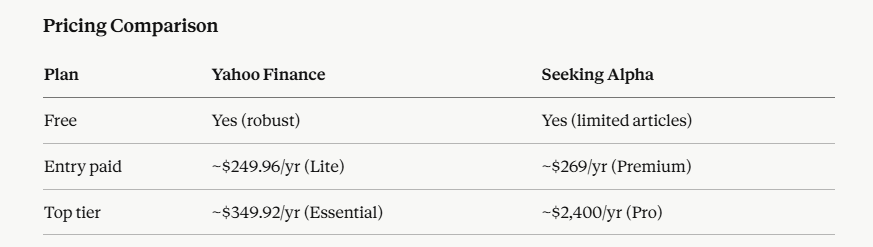
Seeking Alpha offers a free version that includes unlimited access to news, a single premium article per month, and real-time stock prices. The Premium plan offers Seeking Alpha's proprietary Quant ratings, stock screeners, and portfolio health warnings. The premium tier runs approximately $269–$299 per year depending on current promotions.
Q: Does Yahoo Finance have a paid plan?
Yes. Yahoo Finance offers two versions of its premium service: Lite and Essential. The Essential plan includes access to company financials, enhanced charting, the Market Digest newsletter, and reports from both Argus and Morningstar.
Q: Can I track my portfolio on both platforms?
Both platforms include portfolio tracking, so you can monitor your holdings, performance, and allocation in one place. Both also let you export data to spreadsheets, which is useful for custom analysis or record-keeping.
Q: Do both platforms offer real-time data?
Yes, both platforms provide real-time market data, making either suitable for active trading strategies where timing matters.
One thing worth noting on Seeking Alpha's community model: a former Seeking Alpha writer noted that the platform pays contributors based on the views their articles receive, not on whether their investment ideas actually make money. That is a reasonable thing to keep in mind when weighing user-contributed analysis against the platform's proprietary quantitative ratings, which are calculated independently.
Who Should Use Yahoo Finance?
Yahoo Finance works well for investors who want free, reliable access to market data without paying for a subscription. It suits beginners who are still learning how financial statements work, people who trade options or futures, and anyone who wants a broad market overview each morning. Its interface is cleaner for quick lookups, and the breadth of free data remains hard to beat at the zero-cost level.
Who Should Use Seeking Alpha?
Seeking Alpha is the better choice for investors who are willing to pay for access to premium information and expertly-crafted trading strategies. The platform rewards those who read longer-form analysis, study both the bullish and bearish case on a stock, and want a rating system that benchmarks companies against their sector peers. Dividend investors, in particular, benefit from Seeking Alpha's dividend safety and growth grades, which Yahoo Finance does not replicate.
Final Verdict
These two platforms are not true competitors in a winner-takes-all sense. Most serious investors end up using Yahoo Finance for quick, free data lookups and Seeking Alpha for deeper research before making a decision on a position. If you only want one, your choice comes down to budget and investing style. For beginners and casual investors, start with Yahoo Finance — it costs nothing and covers the basics well. For investors who make their own stock selection decisions and want real analytical depth, Seeking Alpha Premium is worth evaluating, especially with a free trial before committing to a year.